
Why Your Customers Stopped Buying (And What To Do About It)
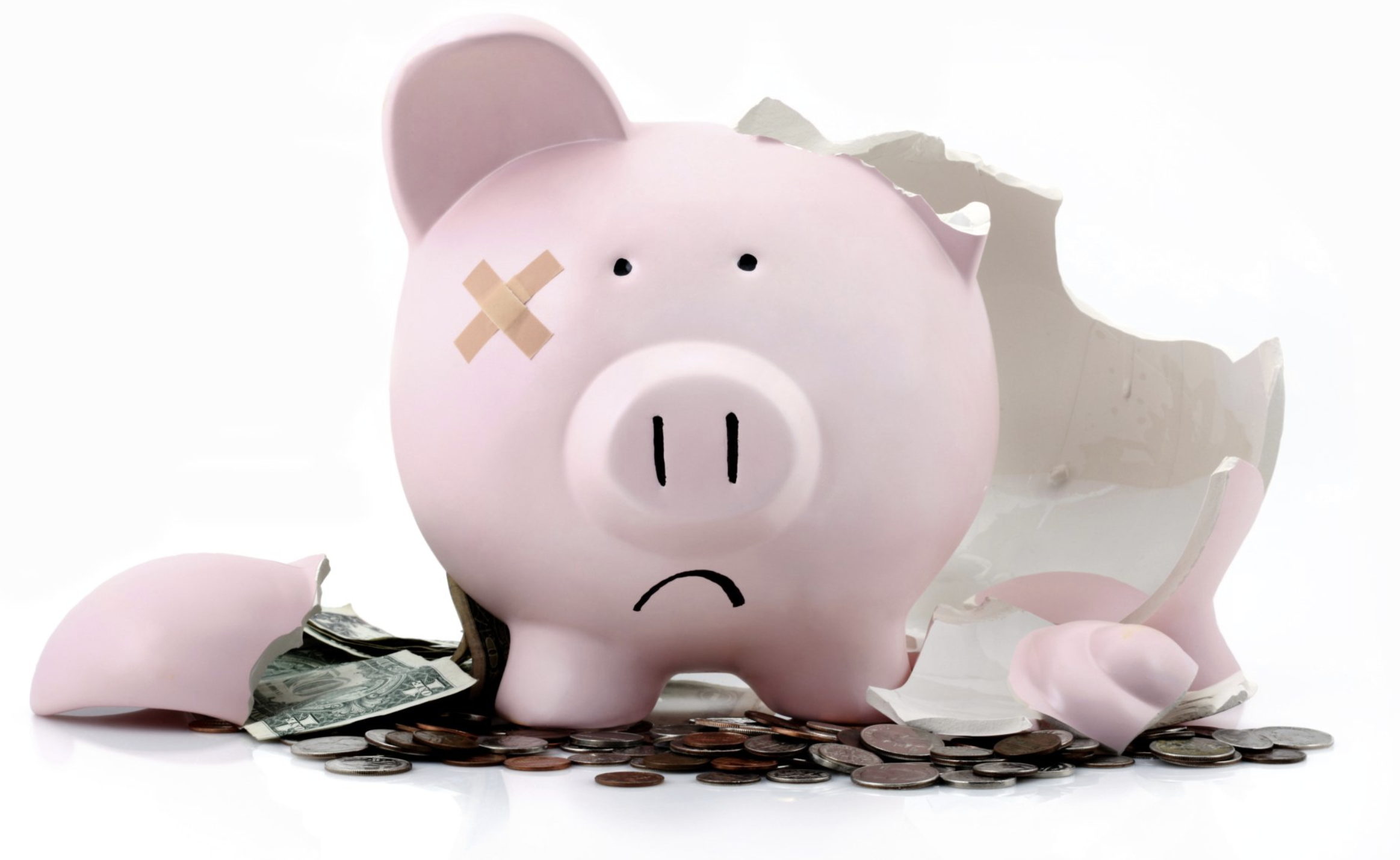
If you're a small business owner right now, you've probably had at least one moment this year where you've looked around and thought:
"What the heck is happening? Nobody's booking. Nobody's buying. Help!"
The economy is weird. Prices are up. Consumer confidence is all over the place. People are nervous. And if you're selling something in the middle of the market, you may have noticed that what used to work isn't working quite as well anymore.
In January, my health insurance bill went up by about $400 a month.
Four hundred dollars. Every month. For the same coverage.
Now, before Dave Ramsey rushes in to tell me to “suck it up and stop eating avocado toast” - that's not really the point. The point is that the money had to come from somewhere.
That extra $400 wasn't sitting around waiting to be spent. It was money that had previously gone toward other things: art, restaurants, travel, classes, supporting local businesses, and the occasional fun purchase that made life feel a little less like an endless parade of responsibilities.
I didn't suddenly stop spending money. I just started spending it differently.
The more I talk to clients, friends, and fellow business owners, the more I think that's what's happening across much of the economy right now. Researchers are finding that Americans are feeling increasingly financially stretched. Many report that prices are rising faster than their income, and middle-income households in particular are feeling squeezed. One recent survey found that roughly 70% of Americans report living paycheck to paycheck.
At the same time, consumer spending hasn't fallen off a cliff. Economists continue to see strong spending in many sectors, particularly among higher-income consumers. There is absolutely a segment of the population still purchasing premium experiences, premium services, and luxury products with very little hesitation.
Those customers exist.
What's emerging is what some economists call a “K-shaped economy”—a situation where different groups of consumers are having very different experiences. Some are cutting back aggressively while others continue spending almost as normal.
That's exactly what I'm seeing with my clients.
A lot of us built businesses that served what used to be a fairly comfortable middle class—people who could pay their bills, save a little money, and occasionally buy something simply because they wanted it. An art print. A family photo session. A handmade gift. A workshop. A custom piece of work.
The challenge is that many of those customers are feeling squeezed from both directions. Housing costs have increased. Groceries cost more. Utilities cost more. Healthcare costs more. Insurance costs more. Everything feels just a little bit heavier than it did a few years ago.
When people feel that squeeze, they don't stop spending altogether. They become more selective.
People may cut back on discretionary purchases, but they're still spending money on things that help them feel better, function better, or navigate an increasingly stressful world. Consumers continue to spend billions on travel, entertainment, wellness, and experiences. Taylor Swift sold out stadiums. Pottery classes are packed. Therapy practices have waitlists. Fitness memberships continue to grow.
People are absolutely still spending money.
It's just... different.
My therapy clients are busy. My salon clients are busy. The gym I go to is packed. Businesses tied to health, wellness, and personal support seem to be holding steady because customers continue to view those services as important investments in their quality of life.
At the same time, many of my clients in the arts, photography, retail, and other creative industries are feeling the shift. Hard.
Not because people suddenly stopped valuing creativity, but because the way they're purchasing it has changed.
Someone who may have purchased a $75 art print a few years ago might now hesitate before pulling the trigger. But that same person will happily spend $10 a month supporting an artist they love via their monthly mail club. They'll buy a sticker, a mini print, a mystery box, a workshop ticket, or admission to a community event. They'll sign up for a class where they get to learn something new or make something with their hands.
The desire is still there. (I’d argue it’s even higher due to the current climate’s stresses.)
The spending pattern is different.
And I think that's where the opportunity lives.
If people are spending less freely, we need to pay attention to what they're still excited to spend money on:
Community. Connection. Experiences. Learning. Wellness. Creativity. Small moments of joy in a world that often feels expensive and overwhelming.
As business owners, that may mean adjusting our offers to match today's consumer reality. Maybe that looks like creating a premium package for higher-income customers or corporate buyers who still have spending power. Maybe it means offering lower-cost entry points that allow people to support your work without making a major financial commitment. Maybe it's building workshops, memberships, events, or community experiences around the thing you already do well.
The businesses that will thrive aren't necessarily the ones with the cheapest prices or the biggest audiences. They're the ones paying attention.
Because your customers probably are spending…
They're just spending differentl